Difference Between Asus Tuf Gaming A16 2025 and Canon Megatank Pixma G3290 Explained
The title may pair two very different devices — a gaming laptop and an inkjet megatank printer — but readers often need to understand how these products fit into a single purchase decision or a home/office technology stack. This article explains the practical differences between the Asus TUF Gaming A16 2025 and the Canon Megatank Pixma G3290, focusing on real-world use cases, costs over time, and what buyers typically care about. The aim is not to pit them as substitutes (they serve different functions) but to clarify when each product makes sense, how they complement one another, and how to prioritize spending when planning for a study, a small business, or a home multimedia setup.
Introduction: Why compare a gaming laptop and a megatank printer?
At first glance a gaming laptop and a printer have little in common. Yet consumers often assemble a complete setup that must balance mobility, performance, and recurring costs. A student or freelancer may choose between allocating budget to a more powerful laptop versus a higher-capacity printer; a home office might weigh portability and screen quality against low-cost high-volume printing. By comparing the Asus TUF Gaming A16 2025 and the Canon Megatank Pixma G3290 across practical dimensions — purpose, total cost of ownership, connectivity, maintenance, and user experience — buyers can make decisions that reflect how they work, play, and produce printed materials.
Detailed product analysis
Asus TUF Gaming A16 2025 — what it is and who it's for
The Asus TUF Gaming A16 series is positioned as a value-oriented, durable gaming laptop that also appeals to content creators and power users who need portable performance. The "2025" designation implies a refreshed model with updated internals and platform improvements. Rather than listing exact CPU and GPU SKUs (which vary by configuration), the TUF A16 line is characterized by several consistent qualities:
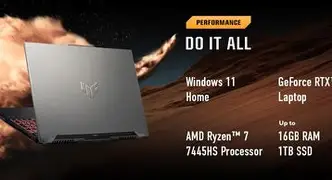
- Performance-minded hardware: Configurations typically offer mid-to-high tier processors and discrete graphics suitable for modern games at 1080p and for GPU-accelerated tasks like video editing.
- High-refresh displays: Panels commonly emphasize a faster refresh rate (120Hz or higher) and reasonably wide color ranges for gaming and media consumption.
- Durability and thermal design: TUF models are built to MIL-STD-inspired toughness and emphasize thermal solutions that allow sustained performance under load.
- Upgradeable components: Many A16 models allow users to add RAM or swap storage — a plus for longevity and value.
- Battery and portability compromises: Because of performance focus and larger screens, battery life and weight are compromises compared with ultraportables.
Real-world use cases for the Asus TUF Gaming A16 2025 include students who also game, independent creators who edit video and render 3D assets away from a desktop, and professionals who need a portable machine to demo graphically intensive applications. Buyers typically care most about sustained frame rates, keyboard comfort for long sessions, screen responsiveness, and heat/noise under load.
Canon Megatank Pixma G3290 — what it is and who it's for
The Canon Megatank line is designed for users who print frequently and want low running costs. The Pixma G3290 is a refillable-ink (megabottle) inkjet that emphasizes economical color printing, simple refill workflows, and straightforward connectivity. Its typical attributes include:
- Low cost per page: Refillable ink reservoirs drastically reduce the running cost of color and black prints compared with cartridge-based printers.
- High page yields: A full set of ink bottles will often last thousands of pages, making the megatank a popular choice for households, students, and small businesses with moderate print volume.
- Compact footprint: Though larger than ultra-compact consumer printers, a megatank printer is still small enough for a study desk or small office shelf.
- Basic productivity features: Megatank models typically focus on printing and may include wireless printing, USB, and sometimes basic scanning; advanced office features (like high-speed duplex scanning or heavy-duty paper handling) are less common.
- Maintenance and care: Megatank printers require occasional nozzle maintenance and, depending on usage patterns, may experience head clogging if unused for long periods.
Typical buyers for the Canon Pixma G3290 include students printing lecture notes and assignments, home users producing photos and documents, and microbusinesses needing receipts, flyers, and forms without the expense of cartridges. Buyers prioritize yield, cost per page, print quality for documents and casual photos, and connectivity to phones and laptops.
Pros & cons
Asus TUF Gaming A16 2025
- Pros:
- Strong performance for gaming and creative workloads in a portable chassis
- High-refresh display options improve responsiveness and motion clarity
- Upgradeable RAM and storage increase lifespan and customization
- Robust build and cooling designed for sustained use
- Wide I/O selection for external monitors, storage, and peripherals
- Cons:
- Relatively short battery life when used for gaming or heavy workloads
- Heavier and thicker than ultraportables — less convenient for frequent travel
- Active cooling can be noisy under load
- Higher initial investment compared with entry-level laptops
Canon Megatank Pixma G3290
- Pros:
- Very low cost per page and high ink yield with refillable bottles
- Reliable for high-volume document printing and occasional photos
- Simple refilling reduces waste and ongoing cartridge purchases
- Good wireless and mobile printing support for modern workflows
- Compact enough for home and small office environments
- Cons:
- Print speeds are modest compared with laser printers for heavy document loads
- Color photo quality is good for casual use but not on par with professional photo printers
- Long idle periods can require extra maintenance (head cleaning)
- No multifunction extras (depending on exact SKU) such as high-speed duplex scanning
Side-by-side comparison
Below is a comparison table highlighting the meaningful differences and complementarities. Because these devices serve different tasks, the table focuses on buyer-relevant dimensions rather than attempting a direct technical parity.
| Aspect | Asus TUF Gaming A16 2025 | Canon Megatank Pixma G3290 |
|---|---|---|
| Device type | Portable computer — laptop for gaming and productivity | Inkjet printer — refillable-ink (megabottle) system |
| Primary purpose | Play games, edit media, run demanding applications | Print documents and photos economically at home or small office |
| Portability | Portable but heavier than ultrabooks; designed to move between locations | Stationary; compact footprint for a desk but not intended for travel |
| Performance | CPU/GPU-driven performance for rendering, gaming, and multitasking | Not applicable; print throughput and color accuracy matter more |
| Connectivity | Wi‑Fi, Bluetooth, USB-C/USB-A, HDMI/DisplayPort options (varies by model) | Wi‑Fi, USB — mobile printing support via apps and AirPrint/Google Print where supported |
| Running costs | No ongoing ink costs; power and upgrade costs are main considerations | Very low ink cost per page; ink bottles are inexpensive relative to cartridges |
| Maintenance | OS updates, battery wear, thermal cleaning, occasional component replacement | Nozzle cleaning, occasional manual maintenance if unused for long periods |
| Best for | Gamers, students who need performance, content creators who need mobility | Students, home offices, small businesses with steady print volume |
| Initial cost | Higher — varies by chosen configuration and GPU/CPU | Lower to moderate — cost-effective for long-term printing |
| Space & power | Requires desk space and a power outlet for long sessions; battery for short work | Small desk footprint; low power draw during printing but requires outlet |
How buyers commonly use these products together
Despite serving distinct roles, the Asus TUF Gaming A16 2025 and Canon Pixma G3290 can complement each other in a home study or small office. Common paired workflows include:
Discover deals on Laptops & Computers — updated daily.
Browse Now →
- Student workflow: The laptop is used for researching, writing assignments, and running study apps; the megatank printer handles printing lecture notes, lab reports, and occasional photo assignments at low cost.
- Content creator workflow: A creator edits photos and video on the TUF A16, then prints proof sheets, mood boards, or client handouts on the Pixma G3290 for review.
- Small business workflow: The laptop runs invoicing and inventory software while the printer produces receipts, shipping labels, and promotional flyers without recurring cartridge expenses.
Buyers who integrate both into a setup typically care about how the devices communicate (wireless printing from the laptop), the ease of mobile printing, and reliability — particularly that print tasks initiated from a high-performance machine complete without driver or connectivity issues.
Buying guide — what to consider before deciding
When choosing between investing more in a laptop or a printer (or deciding how to balance spend across both), the following checklist helps align the decision with practical needs.
1. Define primary tasks and priorities
List the core tasks: gaming, video editing, CAD work, document printing, photo proofing, or administrative prints. If the day-to-day requires heavy GPU use, prioritize a stronger laptop. If printing hundreds of pages monthly is the norm, a megatank printer will save money over time.
2. Budget — initial cost vs total cost of ownership
For laptops, consider the initial hardware cost, potential upgrade costs (RAM/SSD), and how long the device will remain usable. For printers, consider the initial purchase plus ink bottle costs and estimated monthly pages to calculate cost per page. Megatank printers usually have higher upfront convenience and lower long-term consumable costs.
3. Mobility needs
If work requires moving between classrooms, cafés, or client sites, laptop portability and battery life matter more than a stationary printer. If printing is centralized at home or office, a compact megatank model is a practical permanent fixture.
4. Workflow integration and compatibility
Check that the printer supports the laptop’s OS and printing protocols (native drivers, AirPrint, Mopria, or vendor app). Verify wireless stability and whether the laptop’s ports support direct or wired printing if preferred.
5. Print volume and quality
Estimate monthly page volume. If printing hundreds of pages monthly, megatank printers reduce supply expenses. For critical color photo work, evaluate print samples — consumer megatank printers produce good casual photos but professional labs or dedicated photo printers deliver higher-grade output.
Shop the latest Laptops & Computers picks on Amazon.
Browse Now →6. Maintenance and reliability
For laptops, consider warranty options and the availability of service centers. For printers, factor in head maintenance and whether the device will sit idle for long periods; infrequent use can lead to clogged nozzles that require manual cleaning.
7. Future-proofing and expandability
For laptops, modularity (upgrade slots for RAM, additional storage) extends useful life. For printers, consider supported ink bottle availability and whether the manufacturer maintains firmware and driver updates for newer operating systems.
8. Space, ergonomics, and noise
Gaming laptops can run fans loudly under load; consider whether that will disrupt work or calls. Printers require desk or shelf space and generate noise during operation; select models with quiet modes if needed.
Practical purchasing scenarios
To help apply the buying guide, here are typical decision patterns:
- Poor student on a tight budget: Buy a mid-range TUF A16 configuration that balances performance and price if gaming or media creation is essential. Pair with a low-cost megatank printer if printing volume is moderate; otherwise rely on campus printing for infrequent needs.
- Home office with heavy printing but light gaming: Prioritize the Canon Pixma G3290 (or similar megatank) for low running costs, and choose a modestly powered laptop if high-end graphics are not required.
- Content creator who prints proofs and portfolios: Invest more in the laptop for color grading and exports. For printing, consider the megatank for drafts and client handouts but use a professional photo printing service for final portfolio prints.
- Small business owner: Balance spend: a reliable mid-range laptop for administration and a megatank printer for receipts and flyers — both with extended warranties or local support plans.
Final considerations and tips
- Driver and app usability: Before purchasing, confirm driver availability for the current OS on both devices. Ease of use can save hours troubleshooting in a busy household or office.
- Warranty and support: Check local service options. For laptops, onsite or carry-in service can be valuable; for printers, ensure ink supplies and replacement parts are easily obtainable.
- Energy usage: Laptops consume power during charging and heavy use; printers use bursts of power while printing but remain low overall. Consider energy costs if the printer will run many pages daily.
- Environmental factors: If sustainability is a priority, a megatank system reduces plastic waste from cartridges. For laptops, consider repairability and modularity to avoid early replacement.
- Try before you buy when possible: Testing keyboard feel, screen color and brightness, and sample prints provides confidence that device choices match personal preferences.
Conclusion
The Asus TUF Gaming A16 2025 and the Canon Megatank Pixma G3290 serve different but complementary roles. The TUF A16 is a performance-first portable computer built for gaming and content creation, where CPU/GPU performance, screen responsiveness, and thermal management are top priorities. The Canon Megatank Pixma G3290 is a cost-effective printing solution focused on low running costs and high page yields. Buyers deciding between enhancing computing power or printing capacity should first clarify their dominant tasks: prioritize the laptop for compute-heavy workflows and mobility needs; prioritize the megatank printer for frequent, economical printing.
In many real-world setups the two products coexist: the laptop handles creation and management while the printer handles the physical output. Choosing the right configuration of each — mindful of total cost of ownership, maintenance habits, and workflow integration — results in a balanced, functional setup that supports studying, gaming, creative work, and everyday productivity without unnecessary compromise.