Ecotank Et 2720 Review: Real User Experience After 3 Months
I've been using the Ecotank Et 2720 as my primary home printer for about three months now. I bought it because I wanted to stop buying cartridges every few weeks, and the promise of refillable ink tanks sounded like a practical long-term saver. Over a few hundred pages and a mix of printing, scanning, and casual photo work, I've learned what it does well, where it falls short, and what an average home user should expect. This review is my honest, hands-on take — the things I appreciated, the small annoyances I ran into, and practical tips I learned along the way.
Introduction: Why I chose the ET-2720
Before buying this printer, I was frustrated with the recurring cost of ink and with frequent cartridge replacements. I wanted a compact all-in-one that could handle occasional photo prints, school worksheets, and administrative documents without costing a small fortune per month. The Ecotank concept — refillable ink bottles and a visible ink reservoir — appealed to me because it promised predictability and lower running costs. I decided to try the ET-2720 to see if it lived up to the convenience and savings claims in real day-to-day use.
Unboxing and Setup: A Mostly Painless Start
Unboxing was straightforward. The printer felt light and compact for an ink-tank model, and the packing was minimal but secure. Setup took me a bit longer than the box suggested, mostly because I took my time filling the tanks and following the initial ink priming steps. A couple of practical notes from my experience:
- I appreciated the clear, transparent ink reservoirs — they make it easy to see remaining levels without opening anything.
- Refilling the tanks the first time felt a little fiddly; the bottles fit snugly and you need to follow the sequence the manual shows. I was extra careful to avoid spills and that paid off — there was no mess.
- The printer walks you through auto-priming, which took a few minutes. Be prepared to wait; it feels long but is a one-time process.
Once the ink was primed, I linked the printer to my home Wi‑Fi and installed the mobile app. Wi‑Fi setup was smooth on the first day and the printer has stayed connected most of the time, though I had to reconnect it once after a router reboot.
Daily Use & Performance
In daily use, the ET-2720 handled typical home printing tasks with little fuss. I used it for black-and-white documents, color flyers, occasional photo prints, and scanning family recipes. Here’s how it felt during regular work:
- Print speed: It felt adequate for home use. Short documents print quickly enough that I didn't notice a lag for everyday tasks. For more graphics-heavy pages the printer takes a little longer, which I expected.
- Warm-up time: The printer is almost instant from standby, but if it had been powered off for a while there’s a brief start-up sequence.
- Noise: It’s not silent, but it’s not loud either. You can have a conversation nearby without shouting; the printhead movements and paper feed are audible but unobtrusive.
- Paper handling: The paper tray is compact. It works fine for standard paper and envelopes, but you need to be mindful of not overfilling it and of using straight, not warped paper to avoid occasional misfeeds.
Print Quality: Documents and Photos
Print quality is what matters most day-to-day, and my experience was mixed in the best way: generally good for documents and fine for casual photos.
For text documents and business-style pages I was impressed. Fonts are crisp and black text looks darker and more uniform than the old cartridge ink I used. Color documents like charts and simple marketing flyers came out vibrant without oversaturation. If you're printing flyers for local events or kids' school projects, the color output is perfectly acceptable.
Photo prints are where expectations need to be calibrated. I printed a few 4x6 and A4 family photos for a scrapbook. They looked nice when viewed casually, but under close inspection you can see that the color depth and dynamic range don't match what a dedicated photo lab or higher-end photo inkjet delivers. In my experience, the ET-2720 is great for snapshots you want to keep at home and for occasional creative projects, but not for gallery-quality photo prints.
Scanning and Copying
The scanner is a standard flatbed, and in my use it performed well for documents and recipes. Scans were clear and legible; OCR via the mobile app worked reasonably well on printed text. My only complaint is that scanning dark or glossy photos sometimes introduces reflection if the photo isn't perfectly flat against the glass. There's no automatic document feeder (ADF), so if you scan many pages at once you'll need to turn them over manually. For the small batch scanning I do at home, it wasn’t a deal-breaker.
Looking for the best Electronics deals on Amazon?
Browse Now →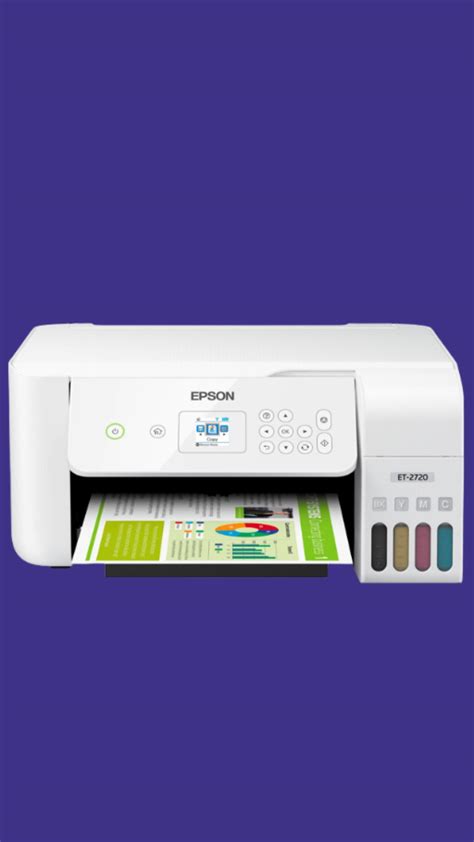
Ink, Refills, and Running Costs
This is the area where the ET-2720 shines for me. The refillable tanks are convenient and I quickly appreciated not having to buy cartridges often. Practical observations:
- Refilling is noticeably cheaper than replacing cartridges, and the bottles included with the initial purchase lasted a long time for my mixed usage.
- The visible ink levels are a relief: I never had a surprise "out of ink" mid-print because I could check the tanks anytime.
- Refills are straightforward, but take time to do carefully. I recommend doing the first refill over a paper towel and with gloves if you're worried about stains.
- To keep print heads healthy, I ran a cleaning cycle once when I noticed the occasional faint streak on a print. The cleaning routine took a few minutes and used some ink, but it fixed the issue.
Overall, in my experience the long-term cost per page is much lower than my old cartridge-based printer, especially for color prints. That said, if you only print a handful of pages monthly, the upfront cost might be harder to justify compared to a very cheap cartridge printer.
Connectivity and Mobile App
I used the printer with a laptop, two phones, and a tablet. The Ecotank connected to my Wi‑Fi and supported mobile printing via the manufacturer's app. My experience with connectivity:
- Mobile printing from my phone worked well, and integration with the app made copying and scanning convenient.
- AirPrint and standard wireless printing also worked reliably for documents from my laptop when the printer was on the same network.
- I did hit a couple of moments where the printer lost Wi‑Fi after my router updated; reconnecting was easy through the control panel and app, but it required a short setup again.
In short, the wireless features are good for typical home environments. If you need an always-on office printer with complex network configurations, you may want to verify compatibility with your specific setup.
Build, Design, and Usability
The ET-2720 is compact and looks modern in a plastic, matte finish. Design notes from personal use:
- The visible ink tank is integrated nicely into the side, which keeps the footprint smaller than some other tank printers I've seen.
- Buttons and a small display provide basic control, but it’s not a touchscreen. For me, the interface was intuitive for common tasks.
- Plastic build feels lightweight and practical rather than premium. I don't expect it to survive heavy commercial abuse, but it's solid for home use.
- Paper tray and output area are easy to access; I didn't have to contort my hands to retrieve prints or refill paper.
Maintenance and Reliability
After three months, reliability has been fine. I had one minor hiccup where a printout showed banding; a head cleaning cycle fixed it. A few tips based on my experience:
- Run a cleaning cycle if you notice faded lines or color shifts — waiting only makes it worse.
- Keep a small kit of spare paper, a lint-free cloth, and gloves for refills.
- Use the genuine ink bottles recommended by the manufacturer. I experimented briefly with a third-party refill and regretted it — color shifts and more frequent head cleanings followed, so I went back to genuine bottles.
I've found that basic care — keeping the printer in a relatively dust-free location and printing regularly rather than letting it sit dry for long periods — prevents most problems.
Pros & Cons
What I liked
- Low running costs: Refillable tanks dramatically reduced my ongoing ink expense compared to cartridges.
- Visible ink levels: The transparent reservoirs make it easy to plan refills and avoid mid-print surprises.
- Solid document quality: Crisp black text and good color for everyday documents and flyers.
- Compact footprint: It fits nicely on a small desk or shelf without dominating space.
- Easy wireless printing: Mobile printing and Wi‑Fi worked well for my household devices.
What bothered me
- Photo quality limits: Photo prints are fine for casual use but lack the depth and detail of a photo-dedicated printer or lab prints.
- No ADF: If you often scan multi-page documents, the lack of an automatic document feeder becomes tedious.
- Refill caution: First-time tank refills require patience and care to avoid mess — it’s not difficult, just a little awkward if you rush.
- Occasional Wi‑Fi hiccups: I had to reconnect after router changes — not a daily problem, but mildly inconvenient.
Comparison Table: ET-2720 vs Typical Cartridge Inkjet vs Entry-Level Laser (My Experience)
| Feature | Ecotank ET-2720 (my experience) | Typical Cartridge Inkjet | Entry-Level Laser |
|---|---|---|---|
| Running cost | Low — refillable tanks cut ink costs significantly over time | High — frequent cartridge replacements increase cost per page | Moderate — toners last long but color lasers are pricey |
| Print quality (docs) | Very good — crisp text and clean graphics | Good — usually acceptable for home use | Excellent — sharp, fast black text |
| Print quality (photos) | Good for casual photos, not lab quality | Varies — some pigment cartridges do well | Poor — lasers are not ideal for photos |
| Maintenance | Moderate — occasional head cleanings, careful refills | Low to moderate — cartridge swaps simple | Low — reliable, less frequent supplies |
| Speed | Good for home use, slower on heavy graphics | Variable — often slower | Fast for black-and-white bulk prints |
| Best for | Home users who want lower ink costs and mixed printing | Infrequent users or those with very low upfront budgets | Small offices needing fast, high-volume black prints |
Buying Guide: Is the ET-2720 Right for You?
If you're considering the ET-2720, here are the practical factors I used in making my decision and that I recommend you consider too.
How much do you print?
My biggest reason to buy was volume. If you print moderately — school handouts, newsletters, photos once in a while — the refillable tanks make sense. If you print only a dozen pages per month, the upfront cost might not be justified.
Find top-rated Electronics products at great prices.
Shop Amazon →Do you need photo-lab quality?
If you want gallery-quality photos, look at dedicated photo printers or use a lab. The ET-2720 is great for casual photos and family albums, but not for high-end photo reproduction.
Do you scan frequently?
If you scan multi-page documents daily, the lack of an automatic document feeder is a real limitation. For occasional or single-page scans, the flatbed works fine.
Connectivity and placement
Make sure you have a stable Wi‑Fi connection in the spot where you want the printer. If you plan to connect multiple devices wirelessly, test the app compatibility with your phone and laptop beforehand.
Refill comfort level
Be realistic about whether you want to refill bottles yourself. It saves money but requires a small amount of care and neatness. If you don’t mind that, the long-term savings are worth it.
Warranty and support
Check warranty terms and local support options. I didn’t need repairs, but having a nearby support channel would be reassuring if problems arise.
Tips from my experience
- Keep an extra set of genuine ink bottles on hand — you’ll feel better about uninterrupted printing during busy weeks.
- Print something at least once a week to avoid nozzle clogs if your usage is sporadic.
- When refilling, follow the manual’s order and avoid rushing. It’s worth the five extra minutes to do it carefully.
Conclusion
After three months with the Ecotank Et 2720, I can say it has been a largely positive experience. I saved money on ink, had reliable document quality, and enjoyed the convenience of visible ink levels and wireless printing. The things that bothered me — the lack of an automatic document feeder, modest photo quality compared to labs, and the need to be careful when refilling — are trade-offs I was willing to make for my use case.
In my experience, the ET-2720 is a smart pick for home users or small households that print regularly and want to reduce ongoing ink costs without sacrificing decent print quality. It won’t replace a pro photo printer or a heavy-duty office machine, but for everyday printing, scanning, and casual photos, it delivered practical benefits and saved me money compared to cartridge-based printers.