Should You Buy the Hs60 Pro Surround in 2026? A Deep Dive
I've been using the Hs60 Pro Surround for several months now, testing it across long gaming sessions, conference calls, movie nights, and a handful of music-mixing experiments. In that time I learned where this headset shines, where it falls short, and whether it still makes sense to buy in 2026 when the market feels crowded with wireless options, advanced spatial audio features, and ever-improving microphones.
Quick summary (if you don't want to read the whole thing)
In my experience the Hs60 Pro Surround is a sturdy, comfortable wired headset that delivers solid virtual surround performance on PC, reliable microphone pickup for team chat, and very good value if you primarily need a wired gaming headset. What I found was that the headset's strengths are comfort and consistent tonality; the disappointments were a slightly plasticky finish, a microphone that is fine but not studio-grade, and the fact that its surround processing only works via USB on PC (so console users get a different experience). If you want wireless freedom, active noise cancellation, or industry-leading mic clarity in 2026, there are better options — but if you want predictable, comfortable, and budget-friendly surround sound for competitive and cinematic use, the Hs60 Pro Surround still holds its ground.
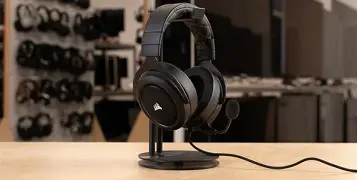
What is the Hs60 Pro Surround?
In my experience the Hs60 Pro Surround is a mid-range, wired headset aimed primarily at gamers who want a comfortable pair of cans with virtual surround capabilities. The model I used is the USB-equipped variant that enables the virtual 7.1 surround feature on PC. Physically it’s a circumaural headset with memory-foam pads, a steel-reinforced headband, and a detachable boom microphone. It’s not a feature-overloaded flagship — no ANC, no Bluetooth — but it focuses on delivering reliable sound, good comfort, and easy-to-use software controls when connected to a PC.
How I tested it
I used the Hs60 Pro Surround every other day for about four months, mixing usage across:
- Competitive multiplayer (Valorant, Rainbow Six Siege) to judge positional cues and comfort during long sessions.
- Single-player, narrative-driven games and movies to evaluate cinematic staging and immersion.
- Music listening (rock, electronic, acoustic) and light mixing to check tonal balance.
- Daily voice/video calls and streaming to test the boom mic performance.
- Console sessions on PlayStation and Nintendo Switch via 3.5mm to verify compatibility and limitations.
I alternated between the USB connection (with software enabled) and analog 3.5mm to compare differences. I also compared the Hs60 to a couple of headsets I already own to get a practical sense of where it sits in 2026.
Design, build, and comfort
One thing I appreciated immediately was the comfort. In my experience the memory-foam ear cups have just enough cushioning to stay comfortable for three- to four-hour play sessions. The headband has a lightweight steel frame and a cloth-covered leatherette pad that distributes pressure evenly. I was surprised by how stable the fit felt during energetic tabletop sessions; it didn’t slip or require constant adjustment.
What I found was that the headset leans more utilitarian than premium. The outer shell is predominantly plastic — not fragile, but visibly plasticky when you compare it to higher-end metal-clad headsets. The microphone is detachable and clicks in securely; the boom has some flex but nothing dramatic. After several months the finish shows minor scuffs on the ear cup rims where I picked it up with my fingers, which is cosmetic rather than functional.
Clamping force was slightly firmer out of the box for me, and it took a week of regular use for the headband to loosen and match my preferred fit. If you have a very large head, I recommend trying one in person first — it will likely break in, but the initial clamp might feel snug.
Sound quality and tuning
In my experience the Hs60 Pro Surround presents a warm, mid-forward sound signature that works well for vocal clarity and in-game footsteps. Bass has enough presence to feel satisfying in explosions and synth-heavy tracks, but it’s not the subwoofer-sized slam you get from some bass-boosted models. Mids are clear, which helped when I was tracking dialogue in single-player games and watching movies. Highs are present but not overly bright, which reduced fatigue during long sessions.
Discover deals on Audio & Headphones — updated daily.
View Offers →For competitive play I noticed dependable positional cues. Footsteps and directional audio were clear enough to make confident decisions — not surgical precision, but more than adequate for most players. In cinematic games and films I enjoyed a cohesive soundstage: the virtual surround expanded the sense of space without feeling gimmicky, especially in well-produced titles that already use strong spatial cues.
For music, the Hs60 Pro is competent. Acoustic and vocal tracks sounded natural; electronic and orchestral tracks benefited from a reasonable low-end foundation. However, if you’re someone who mixes audio professionally, you’ll notice the Hs60 isn't neutral — it’s tuned to be fun and clear rather than flat-accurate.
Virtual surround performance
The headset's selling point is its virtual 7.1 surround via the USB connection. In my experience the surround processing does give a wider perceived stage and helps with front/back separation in games. Important: the virtual surround only runs through the USB connection and the manufacturer's software on PC. When you plug the Hs60 into a controller or a phone via 3.5mm, you get stereo only.
When I tested the surround on PC, I noticed:
- Improved lateral imaging in first-person games — enemies felt more anchored to specific compass points.
- Smoother ambience in single-player soundtracks; environmental reverb felt more enveloping.
- Some artificiality in complex mixes — very dense scenes could blur instrument placement a bit.
In my experience it’s a useful feature for gamers who value immersion and positional hints, but it’s not a replacement for true multi-driver spatial systems or object-based audio engines in high-end products.
Microphone performance
My day-to-day voice calls and in-game comms on the Hs60 Pro Surround performed reliably. The detachable boom picks up voice clearly and rejects a fair bit of ambient noise when I sit close to the mic. I was pleased with how intelligible my voice sounded to teammates — they reported that I was loud and clear, though not exceptionally “studio” in warmth or tone.
There are a few mic quirks I noticed: plosives (hard “p” sounds) can be a little present if I speak directly into the capsule, and the mic coloration is slightly mid-heavy, which emphasizes clarity but can make my voice sound thin on some recordings. For streaming or podcasting you’ll likely want an external mic, but for in-game chat it’s perfectly serviceable.
Software, features, and compatibility
On PC I used the manufacturer’s companion software to enable virtual 7.1 and tweak the EQ. The software is functional and does the job — bass/mid/treble adjustments, a few profile presets, and simple surround toggles. It’s not a deep DSP suite, but it’s intuitive and stable. I did notice that the surround feature requires the software to be running; if you quit the app, the headset falls back to stereo.
Find top-rated Audio & Headphones products at great prices.
Browse Now →Compatibility was straightforward. USB with software for PC (Windows/macOS support depending on the version), and 3.5mm for consoles and mobile. When I plugged the headset into my PlayStation controller, I liked the immediate compatibility — but remember, no 7.1 on consoles with the analog connection.
Longevity and daily use notes
After months of use, the ear pads softened slightly and the headband padding compressed a bit — normal wear. The detachable cable remains a plus since it reduces the risk of irreparable cable breakage. I didn’t experience any driver failures or performance degradation in my unit. The build won't win awards for premium materials, but it feels serviceable for daily use and travel (I bring it to local LAN nights frequently).
Pros & Cons
- Pros:
- Comfortable memory-foam ear pads for extended sessions
- Solid virtual surround on PC that improves immersion
- Detachable boom mic with clear voice pickup for team chat
- Sturdy, predictable wired connection — no battery or pairing headaches
- Simple, usable companion software for EQ and surround toggles
- Cons:
- Surround only works via USB on PC; analog users miss out
- Build uses a lot of plastic and can look cheaper than some rivals
- Microphone is competent but not studio-quality
- No wireless, ANC, or fancy spatial audio techniques that newer headsets offer
- Initial clamping force felt tight until it broke in
Comparison table
| Feature | Hs60 Pro Surround | HyperX Cloud II | SteelSeries Arctis 7 (example rival) |
|---|---|---|---|
| Connection | Wired USB / 3.5mm | Wired USB / 3.5mm | Wireless (2.4 GHz) + 3.5mm |
| Virtual Surround | USB 7.1 on PC | USB 7.1 on PC | Software-based spatial; wireless surround on PC |
| Comfort | Very good (memory foam) | Very good (memory foam) | Excellent (suspension headband) |
| Mic Quality | Good — clear for chat | Good — clear for chat | Good — detachable, tuned for streaming |
| Build Materials | Steel frame + plastic cups | Aluminum frame + plastic | Plastic + steel, fabric suspension |
| Extras | Detachable mic, cable | USB adapter with controls | Wireless receiver, on-ear controls |
| Best for | Wired gamers who want PC surround | Wired gamers who want plug-and-play 7.1 | Wireless users who want low-latency freedom |
Buying guide — who should consider the Hs60 Pro Surround?
In my experience the Hs60 Pro Surround is a great fit for a specific profile of buyer. Consider the Hs60 Pro if:
- You primarily play on PC and want inexpensive virtual 7.1 surround with software control.
- You prefer a wired connection to avoid battery management and potential wireless interference.
- You value comfort over flashy materials and can live with a less premium aesthetic.
- You need a solid mic for in-game comms and team coordination rather than a studio-level microphone.
Think twice before buying the Hs60 Pro if:
- You mainly use a console or mobile device and expect surround via analog — the USB surround won't be available to you.
- You want wireless connectivity or features like active noise cancellation and multipoint Bluetooth.
- You need the absolute best microphone for streaming or podcasting — a dedicated USB microphone will outperform the boom mic here.
What to check before buying
- Confirm whether you need the USB version to access virtual surround on PC; the 3.5mm version will be stereo-only.
- Try the fit if you can — the clamp relaxes with use, but initial fit varies by head size.
- Consider whether you’ll be using manufacturer software — surround requires it on PC, and not everyone wants background apps running.
- Decide if a detachable cable and wired reliability are more important to you than wireless freedom.
Final thoughts and conclusion
After testing the Hs60 Pro Surround for several months, I can honestly say it’s one of those practical headsets that quietly does the job without demanding attention. In my experience it’s comfortable, dependable, and tuned to be enjoyable for games and movies. I appreciated how predictable the sound was across different genres and how comfortably it sat through marathon sessions. The detachable mic and cable are sensible touches that increase the headset's lifespan and practicality.
What bothered me was the unavoidable reality that the Hs60 Pro Surround is a mid-range product in a market that in 2026 offers much wider variety — from wireless low-latency systems to headsets with ANC and highly refined mics. If you want the latest bells and whistles, look elsewhere. But if you want a solid wired headset that gives you usable virtual surround on PC, good comfort, and a mic that’s more than adequate for voice chat, the Hs60 Pro Surround is still a reasonable and honest choice.
My recommendation: buy this if you value comfort, wired reliability, and PC surround without spending top dollar. Skip it if you need wireless freedom, top-tier microphone quality, or advanced noise-canceling features — those are areas where other 2026 options outshine it. For my day-to-day needs, the Hs60 Pro Surround has earned a permanent spot on my desk and continues to be the headset I reach for when I want predictable performance and zero battery drama.